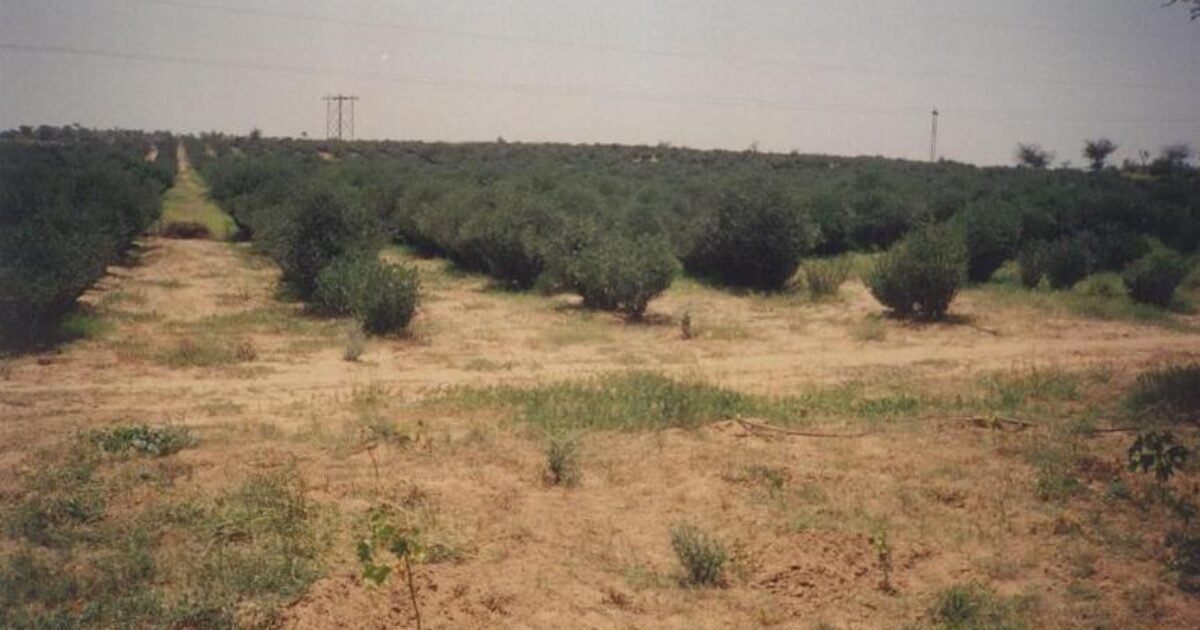
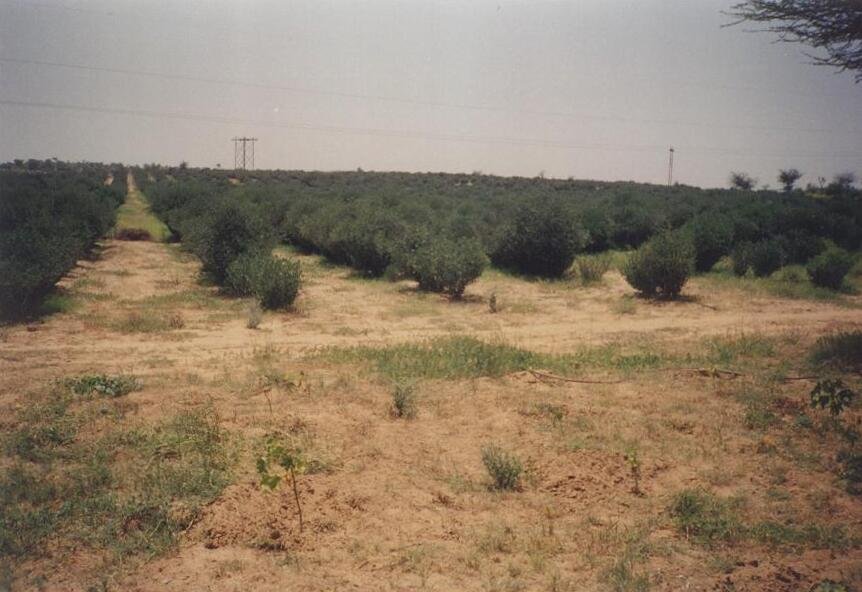
The climate crisis crowd has been pushing countries and companies to plant trees as a means of fighting global warming and reclaiming arid land. However, planting too many trees in places where trees don’t naturally grow has tremendous negative environmental impact. And like most climate policies, such as the use of electric cars that are far worse for the environment than vehicles running on fossil fuel, the tree-planting agenda is shortsighted, using the metric of how many trees were planted as a measure of success rather than calculating any net cost or benefit.
China’s massive regreening campaigns over the past several decades have altered the country’s water cycle in significant and unexpected ways. A new study published in Earth’s Future finds that between 2001 and 2020, large-scale tree planting and grassland restoration increased evapotranspiration across most of China, reducing water availability in both the eastern monsoon zone and the northwestern arid region.
These two regions make up nearly three-quarters of China’s land area. At the same time, precipitation rose in the Tibetan Plateau, which experienced a net increase in available water.
Researchers explain that expanding forests and restoring grasslands reactivate the water cycle by pulling more water from the soil and releasing it into the atmosphere. However, the resulting moisture doesn’t necessarily fall back in the same place. Winds can carry atmospheric water thousands of miles, meaning that water lost through evapotranspiration in one region may become rainfall in a distant area. The study shows that while China’s regreening efforts intensified the overall water cycle, much of the country now loses more water than before.
These findings matter because China already struggles with uneven water distribution. The northern region contains only about 20 percent of the nation’s water but supports nearly half of its population and most of its farmland. Scientists warn that major government water-management projects may fail if they do not account for the water-redistribution effects caused by regreening.
In China’s Three Norths Shelterbelt Program, tree survival rates are often less than 30 percent, biodiversity has decreased, water tables have dropped, and local livelihoods have been disrupted.
The Chinese experience mirrors problems documented worldwide. Research consistently demonstrates that planting trees in grasslands, savannas, and other naturally treeless ecosystems causes serious environmental harm through water depletion, with trees in grasslands reducing streamflow and groundwater recharge due to increased evapotranspiration rates.
Studies in South Africa found that plantations consume more water than original vegetation, reducing river flow downstream. In grasslands and shrublands worldwide where forests were created, streams shrank by 52% and 13% of all streams dried up completely for at least a year.
Beyond water depletion, studies from South Africa, Australia and Brazil indicate that unique biodiversity is lost as tree cover increases in grasslands. Not all land is meant to be forested, and planting in grasslands can reduce carbon storage and increase biodiversity loss.
The wildlife impacts are severe, losing savanna grasslands can mean losing animals like wildebeest, giraffes, rhinos, lions, blackbucks, and the great Indian bustard. Contrary to popular belief, monoculture plantations can reduce carbon storage abilities, especially in grasslands. Grasslands store up to 30% of the world’s carbon tied up in soil, and converting them to forests may actually release stored carbon.
The African Great Green Wall initiative provides compelling evidence of these problems at massive scale. According to Chris Reij at the World Resources Institute, the 20% survival rate of newly planted trees in the Sahara since the 1980s demonstrates the ineffectiveness of current afforestation approaches. In Senegal, satellite analysis of 36 reforestation plots showed only two were much greener since the wall was established, and only one was more green than it would have been naturally. Dennis Garrity at the World Agroforestry Centre called the original Great Green Wall project “a stupid way of restoring land in the Sahel.”
The damage extends beyond ecology. Monoculture plantations frequently shift local community land ownership to private company holdings, displacing local communities and harming their livelihoods. Negative impacts include cultural loss, food insecurity, soil contamination, groundwater depletion and pollution, and loss of land rights.
These problems stem from a fundamental misunderstanding. The UN Food and Agricultural Organisation defines any area over half a hectare with more than 10% tree cover as forest, which assumes landscapes like African savannas are degraded because they have fewer trees.
This definitional problem drives policies that destroy functioning ecosystems. A tree-focused worldview that equates ecological improvement with tree cover does not translate well to dryland ecologies that were originally steppes, grasslands or savannas.
Research shows that trees at higher densities compete with native vegetation, leading to reductions in moisture availability, biodiversity and groundcover protection from erosion.
The study also suggests that similar ecological restoration efforts in other countries may be reshaping local and regional water cycles in ways that must be evaluated on a case-by-case basis.
The post Climate Alarmists’ Massive Tree Planting Damages the Ecosystem appeared first on The Gateway Pundit.
Source: The Gateway Pundit
TruthPuke LLC hereby clarifies that the editors, in numerous instances, are not accountable for the origination of news posts. Furthermore, the expression of opinions within exclusives authored by TruthPuke Editors does not automatically reflect the viewpoints or convictions held by TruthPuke Management.