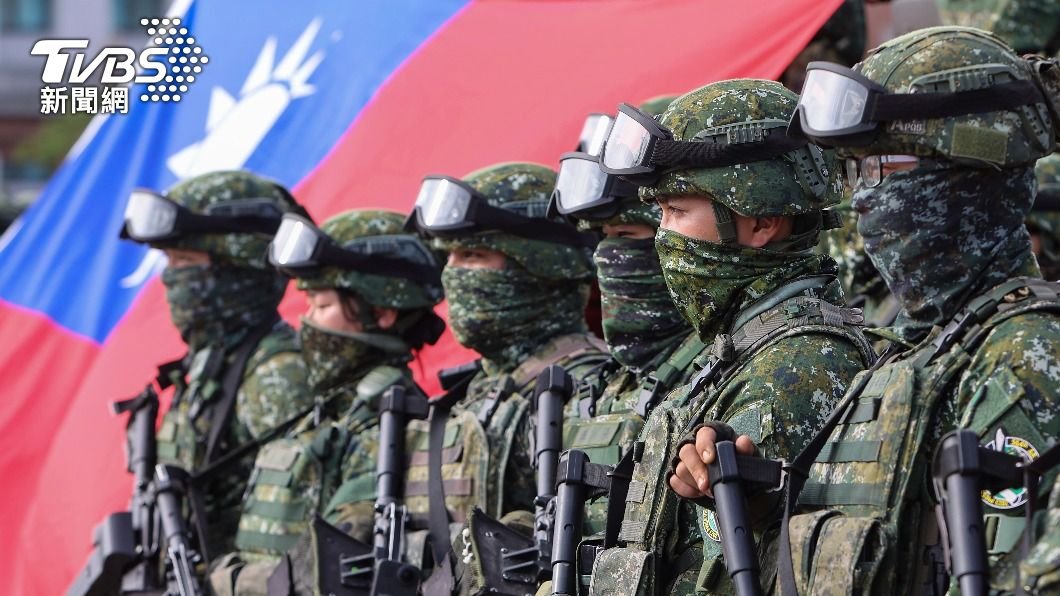
Taiwan’s president, Lai Ching-te, warned that China is accelerating its military intimidation and political influence campaigns against the island. In a recorded interview for the New York Times DealBook Summit, Lai said Chinese military drills targeting Taiwan have become more frequent and intense, while Beijing’s united-front operations are expanding.
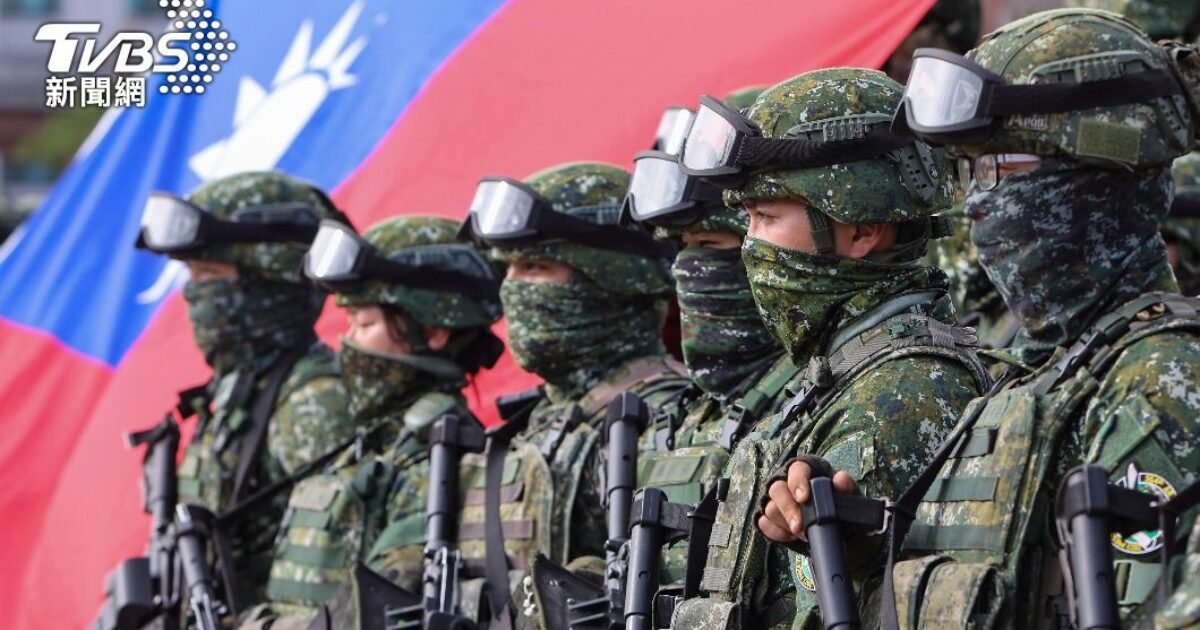
These warnings echo Xi Jinping’s repeated declarations that Taiwan must be brought under CCP control and his order that the PLA be capable of taking the island by 2027. In response to this growing threat, Lai recently announced plans to raise Taiwan’s military spending by an additional $40 billion, aiming to reach 5 percent of GDP by 2030 under pressure from President Trump. Taiwan currently spends about 2.45 percent.
Lai downplayed concerns that U.S.–China trade negotiations might weaken the U.S.–Taiwan partnership, describing the relationship as “rock solid.” He avoided saying whether he trusts the United States to defend Taiwan militarily but noted that cooperation has expanded under President Trump, even though Trump has not explicitly made the defense commitments that President Biden repeatedly voiced.
Each time Biden declared that the United States would defend Taiwan, four times in total, the White House walked his statements back because they violated the One China policy, the overarching framework governing U.S. relations with both Taiwan and the People’s Republic of China. These reversals left lingering questions about how much clarity or consistency Washington is willing to offer.
At the summit, Treasury Secretary Scott Bessent created further confusion by saying the United States is “an ally of China,” later adding “and Taiwan,” while insisting nothing in U.S. policy had changed. Washington continues to rely on strategic ambiguity, a system under which the United States refuses to say in advance whether it would defend Taiwan if China attacks.
This approach dates back to 1979, when the United States ended its defense treaty with Taiwan but passed the Taiwan Relations Act, requiring Washington to help Taiwan maintain the ability to resist coercion without guaranteeing American military intervention. Under this framework, any decision to defend Taiwan ultimately depends on the sitting president.
Within the boundaries of strategic ambiguity, President Trump has continued approving arms sales to Taipei. Beijing sharply condemned the United States after the Pentagon approved a $330 million sale of fighter jet parts and maintenance support to Taiwan, the first such deal since Trump returned to office.
China accused Washington of breaching the One China principle and warned it would take “all necessary measures” to defend its sovereignty, while urging the U.S. to stop supporting what it calls pro-independence forces.
The package includes components and repair support for F-16s, C-130s, and Taiwan’s Indigenous Defence Fighter, which the Pentagon said will help Taiwan maintain readiness against current and future threats. Taipei thanked Washington, calling the strengthened security partnership a key pillar of Indo-Pacific stability.
The announcement came shortly after Trump’s meeting with Xi Jinping, which he said did not include discussion of Taiwan. However, senior defense officials from both sides exchanged warnings the next day and stressed the need for communication channels to manage tensions.
The Trump administration is also pressing Congress to increase military assistance for Taiwan from $500 million to $1 billion in the new 2026 defense appropriations bill, arguing that stronger support is needed to bolster Taiwan’s self-defense and deter China.
The request follows concerns in Taipei over Trump’s mixed rhetoric on Taiwan, including criticism of its semiconductor industry and suggestions that the island should pay for U.S. protection.
Although Trump has declined to say whether he would defend Taiwan militarily, his administration maintains that the additional funding is vital for Indo-Pacific stability and for safeguarding U.S. personnel in a potential crisis. The Senate must still approve the higher appropriation, and Beijing is expected to strongly oppose the increased support.
Strategic ambiguity has long helped prevent war in the Taiwan Strait by deterring both Beijing and Taipei from taking destabilizing actions, since neither side can predict how the United States would respond. Proposals to replace ambiguity with a clear U.S. pledge to defend Taiwan aim to strengthen deterrence, but such a shift could provoke China, embolden pro-independence factions in Taiwan, and increase the risk of conflict.
A formal security guarantee would likely cross Beijing’s red lines, while conditional clarity would either appear less credible or create openings China could exploit through gray-zone tactics. Although imperfect, strategic ambiguity remains effective because Beijing still assumes the United States might intervene militarily, and maintaining that uncertainty best preserves U.S. and Taiwanese interests for now.
The post US-Taiwan Policy, Strategic Ambiguity, and the Looming 2027 Deadline appeared first on The Gateway Pundit.
Source: The Gateway Pundit
TruthPuke LLC hereby clarifies that the editors, in numerous instances, are not accountable for the origination of news posts. Furthermore, the expression of opinions within exclusives authored by TruthPuke Editors does not automatically reflect the viewpoints or convictions held by TruthPuke Management.